Showing posts with label Vocal exercises. Show all posts

Tuesday, 19 March 2019

4 Things to Follow When You are Learning to Sing


A lot of people want to be singers. It is an outlet for everything you feel. It is a stress buster, an emotional medium and an activity you can just have fun doing it. However, it requires skill, preparation and correct knowledge to fully utilise your vocal cords and be the professional you have always dreamed of. Here are some of our tips and guidelines to help you become a professional vocalist.

1. Practicing
Make sure you warm up your voice early in the morning and do all the necessary vocal exercises, as it is the time of the day when you have the most energy, your voice is strongest and can access your full capabilities. Make a habit of doing this regularly and you will see the difference in just a few weeks. Your vocal cords are a sensitive instrument, it can be really affected by simple cold, sore throat, fatigue and will suffer if you overdo it.  So take care of it, and practice early in the morning to get the most efficiency out of your voice.

2. Pitch Reference
If you know an instrument like the keyboard or the guitar, it will help you out a lot when you are singing as it will help you identify the pitch that you have to sing and also give you the idea about when to change your pitch. However if you don't, you can use recommended products to help keep a pitch reference audio when you are singing. Nowadays you have a number of free apps for pitch reference, but knowing an instrument can really amplify your singing ability.


3. Listening
A good professional musician has excellent listening skills. If you develop the skill of listening to music and relating it with the music theory knowledge, you will then able to reach the full potential of your voice. You could use this understanding to improve your vocal range,  apply the right techniques based on genres and to create melodies or tunes. Listen to as many different genres of music as you can to expand your knowledge about music and different techniques which can help you become a better vocalist and musician.

4. Eating Right
For vocalists, it is very important to regulate your food/drink intake. Control and carefully choose what you are eating or drinking to maintain the best quality in the texture and tone of your voice. While we don’t recommend completely cutting out your favourite friend foods or ice creams, taking it in moderation is key. Avoid cold things like ice cream and drinks, oily foods and foods that give you acid reflux, if you have to sing or perform in couple of hours. There are various other drinks that really help your cords, one such example is a drink made of Tulsi (Holy Basil), Turmeric, Honey and Warm Water. Although it taste bitter it really helps your cords to soothe down. You can always ask your mentor the do's and don'ts before your performance but these are the few ones you should know. Don't eat very heavy food, avoid too much spices and most importantly rest your voice before a performance. However, do ensure you warm up 30-45 minutes before your show/performance to prepare your voice to deliver its best.

These points should you give you a head start into becoming a professional vocalist or singer. Learn, Understand and Practise each of these tips regularly to see an improvement in your vocal range, capability and performance ability.


BlueTimbre is a unique Music Company that provides Music Education and  Recording Studio services. BlueTimbre also works with schools to provide end-to-end Music Education solutions for schools. 

The BlueTimbre team comes with decades of cumulative experience in running Structured Businesses, Music Curriculum Development, Music Education and Performance.



Wednesday, 2 August 2017

How to Sight Sing Efficiently

What Is Sight Singing?

Sight singing is sight reading for singers. When singers sight read, they need to think about three factors at once:

    •      The rhythm
    •      The pitches
    •      The words

Rhythm, Pitches, Words

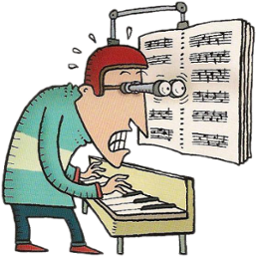
When you practice sight reading, words are not very important; sing “la la la” if you have to. Pitches, while important, are not as important as the rhythm in sight singing. If you sing the wrong pitches and the right rhythm, you’ll know exactly where you are in the music and be able to catch yourself, even if it sounds bad. If you sing the wrong rhythm, on the other hand, you’re in danger of losing your place in the music and having to stop.

Orient Yourself

Check out the key signature. What key are you in? Is it a major or minor key? How many beats are in each measure? Is there a tempo marking?


Scan

Quickly scan the piece to root out surprises. Is it in mixed meter? Are there tempo changes? Any hidden high notes? This is all helpful information.

Get Your Note

Play the opening chords, or at least your first note, on a piano. The more information you and your ears have, the better.

Tap the Beat

Establish the beat for yourself by tapping it on your leg or collarbone. This will help you stay in rhythm when things get crazy.

Think Solfege

If you know what key you’re in, you should know where the movable ‘do’ is If you know where ‘do’ is, identifying ‘so’ and other key notes becomes easier. Thinking in solfege helps many singers sight read more accurately.


BlueTimbre is a Music Company with Music Education spaces, Jam Room and Recording studio located in Whitefield, Bangalore, India. BlueTimbre provides complete end-to-end Music Education solutions for schools. The BlueTimbre team comes with decades of cumulative experience in running structured businesses, music curriculum development, music education and performance.


Source: 
http://www.jamminwithyou.com/nyc/musicblog/topic/sight-reading

http://takelessons.com/blog/sight-singing-practice-z02

Tuesday, 30 May 2017

Why it is Important to Exercise your Voice before Singing

Exercises Help Maintain Your Voice

Do you check the oil and water in your car before taking a long journey? The oil and water help to cool the engine and keeps it in good working order. Singing vocal exercises are as important as the performance itself, if not more so, as the preparation will determine the outcome of the show.

Exercises Help Recover From Sleep

After sleep our voice has not been used for hours.  All kind of mucus builds inside our mouths and nasal when we are asleep, and this reduces the quality of our vocal chords considerably.  Singing exercises make your lungs stronger while building stamina so that you can sing for longer periods without feeling exhausted. 


Exercises Help Reduce Vocal Damage

You don’t want to put a strain on your vocal chords because you failed to loosen up the muscles.  Exercise requires oxygen intake, which in turn stimulates the production of the body’s own mood-lifting endorphin's. So ultimately, singing these exercises should benefit you mentally as well as vocally.

Conclusion

So overall make sure that the voice is maintained regularly and drink plenty of fluid while trying to avoid sugary drinks.  Never go on stage without going through a proper vocal warm up routine and by following these advice your voice will not only get stronger but perform well.


BlueTimbre is a Music hub with Music Education spaces, Jam Room and Recording studio located in India. BlueTimbre provides complete end-to-end Music Education solutions for schools. BlueTimbre management team comes with a decades of cumulative experience in running structured businesses, music curriculum development, music education and performance.

Sources:


http://borntosingmusic.com/singing-vocal-exercises/
https://www.youtube.com/watch?v=F15-PVberTs